What I Thought Digital Marketing Was
Post on Facebook and Instagram. Run a blog. Use Shopify. Maybe do some Facebook ads. Post cute photos of the clothes. Run a contest. Advertise a sale.
I was throwing paint at the wall and hoping something would stick.
Here's how clueless I actually was:
I was spending over $1,000 a month on Facebook ads that just showed my logo to people who lived in my city. Not the clothes. Not styled outfits. Not happy customers. Just my logo. Because I thought "awareness" meant people needed to see my brand name and tagline, and then they'd magically show up.
I didn't know what ROI was. I didn't know how to retarget the people who visited my site. I didn't know what a funnel was or how to get people into my ecosystem. I was not collecting my customer email addresses either in person or online.
What I needed was an expert. But my bank account laughed at me.
So I kept going. Random TikTok dances. Posing with the clothes set to trending music. Talking on Facebook Lives to an audience of 8 people. Posting pictures of models wearing our clothes and hoping someone would click "buy."
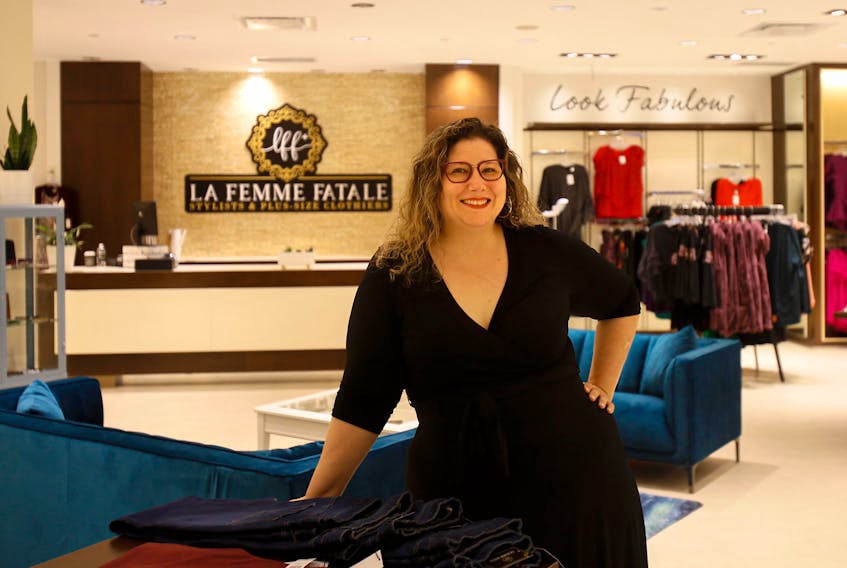
I didn't even know what a customer pain point was when I wrote that business plan and opened my business. What I did know was how hard it was to dress my large body. I knew I wanted to make sure other women like me, women who loved clothes but didn't have access to them in our community, could have something that made them feel wonderful. But I didn't know how to SAY that. I didn't know how to reach the women I'd opened the business for. It took me a while to figure out how to express myself and connect with the women who would become our customer base.
And then three months after we opened our doors, a global pandemic hit. So I did what every overwhelmed business owner does when they don't have a strategy: I winged it. Every single day.
What I Didn't Know I Didn't Know
I didn't know that my business plan wasn't enough. I didn't know what a digital strategy was and had not research it. But more than that there were some real core ideas that I was missing.
I didn't know WHY people would engage with my content. I didn't understand the connection between what my customers actually needed and what I was posting about.
I was posting what I thought Instagram wanted: beautiful still photos of our clothes. Flat lays. Product shots. "New arrivals just dropped!" announcements with carousel posts of perfectly styled outfits on professional models.
And they got... nothing. Crickets. Maybe 20 likes. Zero comments.
This was before Reels existed, when Instagram was supposed to be about beautiful photos. But beautiful photos weren't working. Every other boutique feed looked exactly the same. So how were we supposed to grow organically in a sea of sameness? We were following the advice of the experts, writing captions and using hashtag strategies, but it was never enough.
Meanwhile, Facebook was a different story. People were sharing our content with their friends. And TikTok? TikTok was blowing up for us with organic reach—even though we were mostly just doing trend content. Dancing. Pointing at text overlays. Following whatever audio was popular that week.
We hadn't found our voice yet. We didn't know how to actually connect.
And then I would random post I spent 30 seconds on get traction? Let me tell you it confused the hell out of me at first. It wasn't the pretty product photos or the pre planned clothing transitions. It was the random posts about who we were and what plus-size clothing meant to us and how we struggled with our bodies. Or a post about the lady who came into the store and told me I was going to fail because women in Nova Scotia didn't want to wear beautiful clothes. Those posts got engagement. People in the comments cheered us on. They shared their own stories.
Then we had our best post ever—over 200K views—was about what I used to do for a career versus what I do now. PhD in volcanology → boutique owner. I guess it hit a chord with people. It was so random, but it worked. And still I had no idea why and let alone how to recreate that moment.
Because here's the truth: at first, we weren't looking at the right metrics. We were chasing views. We thought views were the most important thing - engagement.
We didn't know that talking to people and responding to each and every comment was the real secret sauce. That and watch time. But it was exhausting trying to figure our how to create content that was high-performing. We were chasing constantly views and didn't see the long game.
Then Alicia MacCarvell mentioned us.
She tagged us in a post, and suddenly we took off on both TikTok and Instagram. It was like someone had flipped a switch and we were going viral and starting to get recognized. People were excited to meet us when they came into the store and immediately told us that they found us because of Alicia!
And when Instagram finally dropped Reels, we were ready. We'd already learned so much about what worked, what didn't, how to create and edit video content. We'd been learning as we went, growing alongside the technology itself. And we we confident we knew what we were doing (and still we did not know what we were doing).
Here's What I Still Really Didn't Understand
In the store, we were giving customers white glove treatment. We were pulling styles that fit their body types and colors that looked good on them. We were forming real relationships with them.
But online? We were posting model photos and writing "New dress, link in bio." Those model photos? People hated them. Because the models were perfect and airbrushed and—let's be honest—thin. Not average women's sizes, even though they claimed to be plus-size models.
We thought showing professional photos would make us look legitimate.
What we didn't realize was that women didn't want to see perfection. They wanted to see themselves. They wanted to see real bodies in real clothes with someone telling them the truth about fit and fabric and how it actually feels to wear it.
I thought my job was to show the dress. But my actual job? Was to teach women how to feel beautiful in the dress.
And then in 2021, I got help. Sort of. The government had a program to help small businesses during the pandemic. They paid $5,000 to have a local "social media strategist" work with me. Three one-hour sessions. I was so excited. Finally, an expert who could tell me what I was doing wrong.
Her final report? Basically said "keep doing what you're doing." That's it. $5,000 worth of consulting, and her strategic advice was to continue exactly what wasn't working. She had tactics. She didn't have strategy. And honestly? She learned more from me in those three sessions than I learned from her.
That was an expensive lesson in the difference between someone who knows how to post on Instagram and someone who actually understands digital strategy. Thank goodness I was not the one that had to foot that bill.
When It Finally Clicked
We were tired. Frustrated. We'd been doing silly TikTok dances in the clothes and posting pretty photos that went nowhere. We had so called local marketing experts and social media strategist teach us nothing about how to move forward and grow.
And then a customer asked us to show her how something looked on.
So we just... put the clothes on. And talked about them. In real time. On camera in Instagram Stories. Then we started doing it more often. And one day I started calling it "The Daily Try-On."
And our engagement and views went through the roof.
It was the realization that we could be in the dressing room actively showing people how the clothing fit on our bodies. Not doing silly dances. Not posing in perfect lighting. Just talking about the clothes and telling women stories they connected with.
It all came together when I understood that I needed to show up online and EDUCATE women.
Not just post pretty photos. Educate them.
About fabrics - how they feel, how they move, how they fit different body types.
About colors - what works for their skin tone, what makes them feel confident.
About styles - what flatters their shape, what fits their lifestyle.
About how to wear it and WHY. Where you'd wear this dress. What shoes work with these pants. How to style this top three different ways.
Women didn't just want to see the clothes. They wanted to hear about them. They wanted to understand them. They wanted someone to help them figure out what would actually work for their body and their life.
That's when the Daily Try-Ons started working. That's when people started tuning in every single day. Because I wasn't selling anymore. I was teaching. And we were finally doing online what we'd been doing in the store all along: forming relationships.
Something we didn't think we could do on social media. But once we figured out how? It was magic. Our audience was connecting with us and get responses from us in real time. The feedback and engagement we got with the Daily Try-Ons Stories was 10x what we got anywhere else.
And then we brought that same approach into email. Showing them the clothes, yes. But also educating them about fit and styling and how to put together outfits. I wasn't being a slimy sales person who only cared about getting them to buy something. I was connecting with them, I was building relationships with them, I was building trust. They knew that they were going to get great clothing that would fit their bodies and that I genuinely wanted them to look and feel good in what they were wearing.
It took me three years to figure out what should have been obvious from day one: tactics without strategy are just expensive guesswork.
The Difference Between Tactics and Strategy
My business plan had a to do list of tactics: "Use Instagram. Post on Facebook. Start a blog."
But it had zero strategy.
I didn't know WHO I was actually talking to. I had the demographics, but I was not speaking to their pain points about shopping.
I didn't know WHAT transformation I was selling. I was selling clothes but they were buying the confidence we taught them to wear the clothes with.
I didn't know HOW to move someone from stranger to customer. I was just posting and praying.
If you read that business plan today, you’d see charts, graphs, and census data. I knew the logical side of the business inside and out. I thought I was over-prepared because I had the data. I’m a researcher at heart, I had dug deep into the numbers.
But businesses aren't built on spreadsheets. They are built on people.
And that is where I missed the mark. I had all the information, but I had none of the insight.
Here's the real difference:
I knew my demographic: Women, size 12-24, ages 25-50. I knew the household income stats in my trade area. I knew the obesity stats in my province. I had dug deep into the research side of things because that is where I shine. But I didn't know my customer's pain point. It wasn't "I need clothes." It was "I don't know how to dress this body and I'm tired of feeling invisible."
I knew my product: trendy plus-size fashion. But I didn't know my transformation. It wasn't selling dresses. It was helping women feel confident walking into a room.
I had tactics: Instagram, email, blog. But I didn't have content pillars — the themes that would guide every single post. Education. Styling. Body confidence. Community.
I had a list of things to do. But I didn't have a framework for why any of it mattered or how it all connected.
That's the difference between a marketing plan and a marketing strategy.
If I Could Go Back
I wouldn't add more pages to my business plan.
I'd write a completely separate digital strategy document — one that answered the questions my 50-page plan never asked.
Just three questions. But answering them would have changed everything.
Question 1: Who Are My Customers and What Actually Keeps Them Up at Night?
My business plan had demographics. Pages of them. Age ranges, household income, obesity statistics. But here's what it didn't have:
The Psychographic Profile
• What do they value beyond just "stylish clothing"?
• What are they seeking emotionally when they shop?
• What kind of experience do they desire?
• How do they want to FEEL when they walk out of my store?
The Behavioral Profile
• Where do they actually spend their time online?
• How do they engage with brands they love?
• What makes them open an email versus delete it?
• When are they most likely to make a purchase decision?
The Real Pain Points
• It wasn't "I need clothes" → It was "I don't know how to dress this body and I'm tired of feeling invisible"
• It wasn't "I want variety" → It was "I want boutique-level service but traditional boutiques make me feel overlooked"
• It wasn't "I want plus-size options" → It was "I want quality garments that make me feel confident, and I'm tired of settling for whatever fits"
If I'd asked these questions, I would have known:
• They weren't buying CLOTHES → They were buying CONFIDENCE
• They didn't want to just SEE the dress → They wanted to understand how to feel beautiful IN the dress
• They weren't just customers → They were women struggling with the same things I struggled with.
Question 2: Why Would They Choose Me Over the Boutique Down the Street?
My business plan had a SWOT analysis. Competitor research. Pricing strategy. But here's what it didn't have:
My Unique Value Proposition
Not just "what I do" but "why it matters to THEM."
What My 2019 Business Plan Said:
"La Femme Fatale Plus-Size Clothiers... will provide our customers with stylish yet affordable outfits to fill their wardrobe that will fit their body shape. We will make their shopping experience unique by providing each shopper the option to work with our in-house stylist."
That's it. That's what I thought was my value proposition.
Here's what's wrong with that:
It's all FEATURES. "We offer styling." "We have plus-size clothes." "They're affordable."
But why should she care? What's the transformation? What problem am I actually solving?
I didn't know. So I couldn't tell her.
What My 2024 Digital Strategy Said
By the time I wrote my comprehensive digital strategy in 2024, I finally understood what my business was really about. Here are the Three Core Principles I Eventually Discovered:
1. Personalized Styling Experience
Not: "We offer styling services"
But: "Every woman deserves to feel confident and empowered in her clothing choices. Whether you're a size 4 or a size 24, our experts are dedicated to helping you find clothing that not only fits perfectly but also makes you feel amazing."
The difference? One is a service. The other is a transformation. From "I don't know how to dress my body" to "I feel amazing."
2. Size-Inclusive Philosophy
Not: "We carry sizes 12-24"
But: "We're committed to size-inclusive fashion for modern women. We're not just selling clothes—we're promoting body positivity and inclusivity. You're not settling for what fits. You're choosing what makes you shine."
The difference? One is inventory. The other is a movement. From "I'll take whatever fits" to "I deserve beautiful clothes."
3. Quality and Exclusivity
Not: "We carry boutique brands"
But: "We carefully select high-quality boutique brands that are not found in regular stores. Each piece in our collection is chosen for its craftsmanship, durability, and style—value that surpasses the price tag."
The difference? One is a claim. The other is a promise with specific criteria (craftsmanship, durability, style). From "expensive clothes" to "investment pieces that last."
The Positioning Statement I Needed:
"At Incandescent, we celebrate the beauty and diversity of women of all shapes and sizes. We don't just sell clothes, we provide personalized styling that makes you feel seen, valued, and confident."
That's a unique value proposition.
Not what I DO. But what it MEANS for you.
If I'd asked this question in 2019, I would have known:
My competitors offered clothes → I offered transformation
My competitors had inventory → I had a philosophy
My competitors wanted transactions → I wanted relationships
My competitors said "we have your size" → I said "you deserve to feel beautiful"
The difference between those two value propositions? Five years of learning what my customers actually needed.
Question 3: How Does My Content Move Them From 'Never Heard of You' to 'Take My Money'?
My business plan had a social media section. Seven pages. "Post on Instagram. Send emails. Run a blog." But here's what it didn't have:
Content Pillars (The themes that guide everything I post):
1. Fashion Inspiration – Outfit ideas, trend forecasts, seasonal looks
2. Body Positivity & Confidence – Celebrating diverse bodies, real customers in our clothes
3. Styling Tips & Tricks – Practical how-tos for different body types
4. Behind-the-Scenes – Humanizing the brand, introducing our team
5. Customer Stories – Testimonials, success stories, user-generated content
6. Community Engagement – Q&As, polls, interactive challenges
7. Promotions (only 1 of 7!) – Sales events, exclusive offers
The Customer Journey Map:
Stage 1: Awareness (They don't know me yet)
• Content: Relatable pain points, body positivity messaging, fashion inspiration
• Goal: Make them think "Finally, someone gets it"
Stage 2: Interest (They're paying attention)
• Content: Styling education, behind-the-scenes, brand story
• Goal: Make them think "I want to learn from them"
Stage 3: Consideration (They're thinking about buying)
• Content: Customer testimonials, detailed product education, styling demos
• Goal: Make them think "This could work for ME"
Stage 4: Purchase (They're ready to buy)
• Content: Clear product benefits, size guides, personalized recommendations
• Goal: Make them think "I trust them to help me look good"
Stage 5: Loyalty (They're repeat customers)
• Content: Exclusive offers, VIP treatment, community connection
• Goal: Make them think "I'm part of something special"
The Content Strategy Framework:
Not just "what platforms" but:
• WHO I'm talking to at each stage (awareness vs. ready to buy)
• WHAT they need to hear from me (education vs. validation vs. invitation)
• WHY they should care (what problem does this solve?)
• HOW this moves them closer to purchase (or deeper into relationship)
If I'd asked this question, I would have known:
• Content without a customer journey = random noise
• Every post should serve a purpose in moving someone through stages
Education builds trust → Trust builds relationships → Relationships build sales
The Document I Wish I'd Written in 2019
A separate digital strategy document that answered these three questions with:
✓ Customer Deep-Dive: Demographics + Psychographics + Behaviors + Pain Points
✓ Unique Value Proposition: Not features—TRANSFORMATION
✓ Content Pillars: 7 themes that guide every post
✓ Customer Journey Map: 5 stages from stranger to loyal fan
✓ Platform Strategy: Where to show up and WHY
✓ Email Strategy: Nurture sequences that build relationships
✓ Metrics That Matter: Not just likes—actual business impact
That's the difference between a business plan and a digital strategy.
One tells you how to run the business.
The other tells you how to attract the customers.
What This Means For You
If you're reading this and thinking "Oh god, that's me" — let me tell you something:
You're not failing. You just don't have a strategy yet. And that's fixable.
What you probably have are tactics. You know you need to "post on social media" and "send emails" and "have a website."
But do you know:
• What specific problems your content solves for your customers?
• Why someone would follow you instead of your competitor?
• How your content moves someone from stranger to customer?
• What you should be talking about and why?
That's strategy. And you can't outsource it until you understand it yourself.
You can hire someone to post for you. You can hire someone to run your ads. You can hire someone to design your emails. But you can't hire someone to build your strategy unless you first understand what your customers actually need and how you uniquely solve that need.
The Work That Matters
The work isn't learning the tools. The tools are easy. The work is understanding your customer so deeply that you know exactly what they need to hear, when they need to hear it, and how to say it in a way that makes them think "YES, this person gets me."
That's what was missing from my 50-page business plan.
And that's what I help my clients build now through digital strategy consulting and one-on-one coaching.
Not more tactics. Not another course on Instagram Reels or Facebook ads. But actual strategy. The foundation that makes everything else work.
Here's what a real digital strategy document includes (that my business plan didn't have):
• Customer pain points AND transformation — not just who they are, but what keeps them up at night and what they actually want to become
• Content pillars — the 3-5 themes that guide every single thing you post, so you never sit there wondering "what should I say today?"
• Brand goals vs. numeric goals — what you want to be known for (thought leadership, community, trust) separate from what you want to achieve (followers, sales, revenue)
• Your unique positioning — not just "what you do" but why someone should choose YOU over every other option
• Customer journey mapping — how your content moves someone from "never heard of you" to "take my money," with specific touchpoints at each stage
• Platform-specific strategies — because what works on Instagram Stories is completely different from what works on TikTok or email
• Email nurture sequences — not just "send emails" but what story are you telling? How are you building relationships? What's the purpose of each message?
• Lead magnet strategy — how you're capturing people who aren't ready to buy yet and staying connected until they are
That's strategy.
And you can't outsource your social media and email marketing it until you build a digital strategy and understand how important is and why it works.
So Where Are You Right Now?
Take a minute and think about how you would answer these questions:
• Can you describe your ideal customer's biggest struggle in one sentence? (Not "they need X product" — what keeps them up at night?)
• Can you explain why someone should choose you over your competitor without mentioning price or features?
• Do you know what your content is supposed to DO? (Not just "get engagement" — what's the actual goal?)
Did you hesitate or struggle with any of them?
If you did, you need a digital strategy.