The Day Instagram Could Have Ended Everything
Forty thousand people. That's what we had across our platforms when Facebook's servers went down in 2021. (It actually happened again today June 12, 2026. The platform was out across the USA for almost an entire work day.)
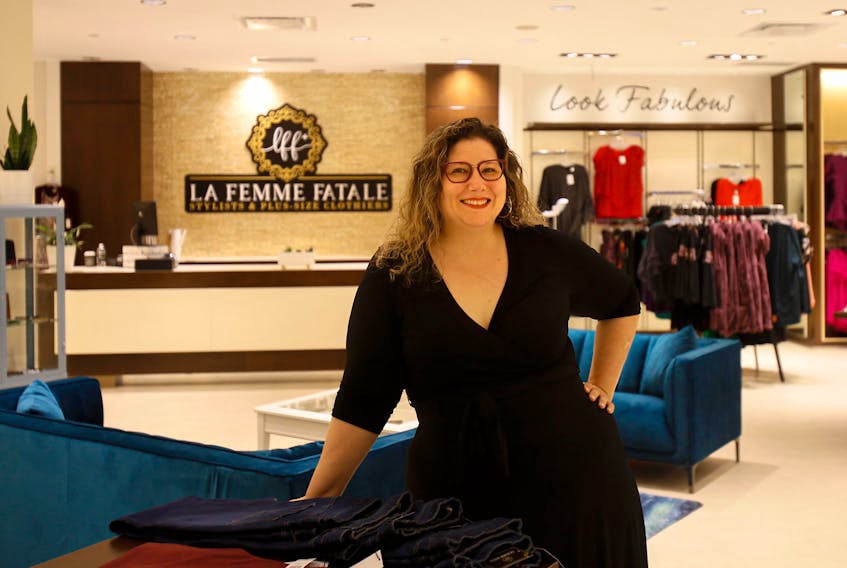
Over 20,000 on TikTok. Nearly 5,000 on Instagram. More than 3,000 on Facebook. Women who knew us, trusted us, drove hours to shop with us. And for six hours, I had no direct line to a single one of them. No email address. No phone number. No way to say "we're still here" that didn't go through a platform that could decide, at any moment, to charge me for the privilege.
That was the moment I understood what renting actually meant.
But the outage was only the beginning. By 2022, something more targeted was happening — and this time, the platforms didn't go down. The accounts did.
Consumer protection agencies recorded a 1,000% spike in complaints about Meta account takeovers that year. In the US alone, 41 state attorneys general formally complained to Meta about the surge — describing a "dramatic and persistent spike" in account takeovers that their offices were being left to clean up. Canada had no shortage of victims either. The platforms don't stop at the border.
The "friend-in-need" scam went completely viral: a message would arrive appearing to come from someone you knew. "I'm locked out — can you click this link for me?" One click. Your password reset request handed directly to a stranger. Your followers, your DMs, your business — gone. And Meta, dealing with massive internal layoffs that had thinned its safety and security teams, was largely unreachable. Victims were left with no way to escalate to a human being.
I had two-factor authentication. By mid-2022, I realised that wasn't enough. I upgraded every account to an authenticator app and held my breath.
It still hasn't stopped. Just this week, it emerged that hackers exploited a flaw in Meta's own AI support chatbot to take over more than 20,000 Instagram accounts — including profiles linked to the Obama-era White House and the US Space Force — using an attack that required no technical skill whatsoever. Users who lost their accounts say there is still no way to reach a human for help.
The platforms were never as safe as they felt. Which brings me back to the same question I was asking in 2021: if this were permanent, how much of your business would survive?
Foundation 4 is about fixing that. It's about building the infrastructure that means your business can survive a platform outage, an algorithm change, a policy shift, or a six-hour server meltdown — because your most valuable customer relationships live somewhere that belongs to you.
That somewhere is your email list. And the system that fills it is your funnel.
What a Funnel Actually Is (It's Not What You Think)
The word "funnel" gets thrown around so much in marketing that it's lost most of its meaning. People hear it and picture complicated software, aggressive upsell sequences, and the kind of sleazy sales tactics that make you want to unsubscribe from everything.
That's not what a funnel is. That's what a bad funnel is.
A funnel is simply the path a stranger takes to become a customer. It has a beginning — someone discovers you. A middle — they learn to trust you. And an end — they buy something.
Every business has a funnel whether they've designed one or not. The question isn't whether you have one. The question is whether yours is intentional or accidental.
At Incandescent, our accidental funnel looked like this: someone found a TikTok, followed us on Instagram, watched Daily Try-Ons for a few weeks, drove to the store, bought something. It worked — because the content was good and the community was strong. But it was entirely dependent on the algorithm continuing to show our content to the right people.
Our intentional funnel — the one we built later — looked like this: someone found a TikTok, clicked through to a landing page, downloaded a free style guide, got added to our email list, received a welcome sequence that felt like a conversation, and got a specific offer when they were ready to buy. We owned every step after the first one.
The difference between those two funnels is the difference between renting and owning. Both can generate revenue. Only one gives you control.
I call this The Ownership Funnel — and it has four stages every solopreneur needs before spending another hour creating content.
Stage 1 — Attract. This is your content. TikToks, Instagram posts, blog posts, podcasts. The goal: get the right person to stop scrolling. Not everyone. The right person.
Stage 2 — Capture. This is your lead magnet and landing page. The goal: convert a follower (rented) into an email subscriber (owned). This is the most important transition in your entire funnel — and most solopreneurs skip it entirely.
Stage 3 — Nurture. This is your email sequence. The goal: deepen trust between the moment someone joins your list and the moment they're ready to buy.
Stage 4 — Convert. This is your offer. The goal: make a specific, well-timed ask to a person who already trusts you. When Stages 1 through 3 are done right, Stage 4 almost takes care of itself.
Most of the content strategy work we've done in this series lives in Stage 1. Foundation 4 is about building Stages 2, 3, and 4.
The Lead Magnet: Your First Real Offer
Here's the uncomfortable truth about lead magnets that nobody in marketing wants to say out loud: most of them are garbage.
A checklist with seven items any Google search would return. A PDF that repackages blog content. A "free discovery call" dressed up as a resource. These aren't lead magnets — they're disappointments disguised as value. And when someone downloads your lead magnet and feels let down, they don't just unsubscribe. They form an opinion about what you and your business are worth.
Your lead magnet is your first real offer. Not your first free thing — your first offer. It sets the expectation for everything that follows.
A great lead magnet does three things simultaneously. It solves a specific, urgent problem for a specific person. It demonstrates your expertise in a way that makes the reader think "if the free thing is this good, what must the paid thing be like?" And it attracts the right people — the ones who are actually a fit for what you sell — while naturally filtering out the ones who aren't.
At Incandescent, our best lead magnet was a style guide called "The Real Women's Guide to Dressing Your Body Shape." Not a generic body shape quiz. Not a seasonal trend report. A specific, opinionated, genuinely useful guide that told plus-size women in plain language what actually worked for their shape and why — the kind of advice you'd get from a friend who happened to know a lot about clothes.
Women who downloaded it were pre-qualified. They cared about personal style. They valued honest, practical advice. They were exactly who we wanted in the store.
That's the test for your lead magnet. Ask yourself: would the person who downloads this and loves it be a natural fit for what I sell? If yes — you have a lead magnet. If no — you have a freebie that's filling your list with the wrong people.
What makes a lead magnet worth downloading:
It solves one specific problem completely — not seven problems partially. "How to write your Instagram bio" is a better lead magnet than "The Complete Social Media Guide." Specificity signals expertise.
It delivers a quick win. The person who downloads your lead magnet should be able to implement something within 24 hours and feel the result. Quick wins build trust faster than anything else in your funnel.
It naturally points toward your paid offer. Not with a hard sell at the end — with a logical gap. The lead magnet solves one piece of the problem. Your paid offer solves the whole thing.
The Landing Page: One Job, One Page
Your lead magnet lives on a landing page. And a landing page has exactly one job: get the person in front of it to give you their email address in exchange for the thing you're offering.
That's it. One job. Not to tell your brand story. Not to showcase your full range of services. Not to have a navigation menu that takes people somewhere else. One job. One page. One decision.
I cannot tell you how many solopreneurs I've worked with who have a beautiful website and a great lead magnet and a landing page that sends people to their homepage — which then asks them to do eleven different things at once and converts nobody.
Your landing page needs four elements and nothing else:
A headline that names the specific problem you're solving. Not "Download My Free Guide." Something like: "Finally Figure Out What Actually Flatters Your Body — Without Spending Three Hours in a Fitting Room."
Three to five bullet points that tell the person exactly what they'll get and what it'll do for them. Not features — outcomes. Not "a 12-page PDF" — "a simple framework for identifying your body shape and the three silhouettes that will always work for you."
A single opt-in form. First name and email address. That's all you need. Every additional field you add cuts your conversion rate.
A visual of the lead magnet. A clean mockup of the guide, the checklist, the video thumbnail. People convert better when they can see what they're getting. It makes the thing feel real.
Nothing else. No blog posts in the sidebar. No "while you're here, check out my services" banners. No social media links that take them off the page before they've converted. One job. One page.
The Email Sequence: The Conversation Before the Sale
Here's where most people abandon their funnel.
They build the lead magnet. They set up the landing page. People start subscribing. And then... nothing. Or worse — they get added to a list that immediately starts pitching them a $2,000 programme they've never heard of from a person they discovered three days ago.
Both are wrong. Silence trains your list to forget you. Immediate selling trains your list to distrust you.
What works is the email sequence — a series of three to five emails sent automatically over the first one to two weeks after someone joins your list. I call it The Welcome Window, because these are the emails that define the entire relationship.
Email 1 — Deliver and delight. Send this immediately. Deliver the lead magnet, yes — but also tell them what to expect from you. Not a sales pitch. A genuine "here's who I am and what I'm here to do." Keep it short. Keep it warm. Make it feel like a person wrote it, because a person did.
Email 2 — The story. Send this two to three days later. Tell them why you do what you do. Not your credentials — your reason. The teal couch. The pandemic DM. The moment things changed. People don't buy from experts. They buy from people they trust, and trust comes from story.
Email 3 — The useful thing. Send this three to four days after Email 2. Give them something genuinely valuable that has nothing to do with selling. A framework. A tool. A perspective they haven't heard before. This is the email most people skip — and it's the one that matters most.
Email 4 — The soft invitation. Send this a week after Email 3. Now — and only now — you mention what you do and invite them to explore it. One link. One ask. Not a hard sell. An invitation.
Email 5 — The ongoing relationship. This is where your regular email content begins. A weekly or biweekly email that continues the conversation — more Wisdom, more Wins, more Wit. The same pillars you're using in your social content, delivered directly to their inbox.
The Welcome Window doesn't just convert subscribers to customers. It trains your list to open your emails — because the first four taught them that opening your emails is worth their time.
The Email List: The Only Audience You Actually Own
When Instagram went down in 2021, the businesses that felt nothing were the ones with strong email lists. They could send an email that afternoon — "Instagram's down, but we're here, here's what's happening this week" — and their audience received it. No algorithm. No platform dependency. Direct line.
That's what an email list is. Not a nice-to-have. Not a legacy channel from the days before social media. The only digital asset your business owns outright — the one thing no platform can take away, throttle, or charge you to access.
Here's what I want you to understand about email versus social media: your average Instagram post reaches between 3% and 10% of your followers. Your average email reaches 100% of your list — and a good one gets opened by 30% to 45% of them.
That means an email list of 500 engaged people with a 40% open rate gives you 200 people genuinely reading your words every single time you send. Compare that to 5,000 Instagram followers with a 5% reach rate — that's 250 people seeing your post, and most of them are scrolling past it in 1.3 seconds.
The list is the asset. Social media is the acquisition channel.
Your entire content strategy — the pillars, the channels, the frequency we built in Foundation 3 — should have one underlying goal: move people off the platforms you rent and onto the list you own. Not immediately. Not aggressively. But consistently, with every piece of content, with every lead magnet, with every landing page — you are building the owned audience that your business will ultimately run on.
The Foundation 4 Check-In
Answer honestly. No one's watching.
Your funnel:
☐ I can describe the path a stranger takes to become a customer in my business
☐ My funnel is intentional — I designed it — not just something that happens accidentally
☐ I have a way to capture email addresses from people who discover me through content
☐ I know which stage of my funnel is currently the weakest
Your lead magnet:
☐ I have a lead magnet that solves one specific problem for one specific person
☐ My lead magnet delivers a genuine quick win — not just a repackaged blog post
☐ The person who downloads and loves my lead magnet is a natural fit for what I sell
☐ My lead magnet naturally points toward my paid offer without a hard sell
Your landing page:
☐ My lead magnet lives on a dedicated landing page — not buried on my website
☐ My landing page has one job and one job only: collect the email address
☐ There are no navigation links or distractions on my landing page
☐ My landing page headline names the specific problem I'm solving
Your email sequence:
☐ New subscribers receive an automated welcome sequence — not silence
☐ My welcome sequence delivers value before it makes any kind of offer
☐ My emails sound like a person wrote them — not like a marketing template
☐ I email my list consistently enough that they remember who I am
Count your checkmarks:
13–16 checked: Your Foundation 4 infrastructure is solid. The work now is optimisation — testing your landing page headline, refining your welcome sequence, growing the list consistently.
8–12 checked: The pieces exist but the system has gaps. The most common gap: a lead magnet with no landing page, or a landing page with no email sequence after it. Find the break in the chain and fix it first.
4–7 checked: You have content but no capture mechanism. Your highest-leverage move right now is building one lead magnet and one landing page. Just one. This week.
0–3 checked: You're at Stage 1 only — attract — with nothing capturing the attention you're earning. Every piece of content you create is generating goodwill that you have no system to convert. Start with your lead magnet concept before you post another thing.
What This Means For You
Foundation 4 is the infrastructure layer. The work that happens behind the scenes — the pages nobody sees, the emails that go out automatically, the list that grows quietly in the background. It's not as visible as your content. It's more important than your content.
Lesson 1: You don't own your social media audience. You're renting it. The platform can change its algorithm, increase its ad costs, or go down entirely — and there's nothing you can do about it. Your email list is yours. Build it like your business depends on it, because it does.
Lesson 2: Your lead magnet is your first offer, not your first freebie. It sets the expectation for everything that follows. Make it genuinely useful, make it specific, make it something you'd be proud to charge for — and then give it away, because the relationship it starts is worth more than the price.
Lesson 3: A landing page has one job. Not two. Not five. One. The moment you add a second option to a landing page, you've cut your conversion rate. Give people one decision and make it easy to say yes.
Lesson 4: The Welcome Window defines the relationship. The first four emails you send are the most important emails you'll ever write to that person. They determine whether your list opens your emails or ignores them for the rest of time. Write them with the same care you'd give a first conversation with someone you genuinely want to know.
Lesson 5: The list is the asset. Everything else is the acquisition channel. Your content, your social media, your SEO, your word-of-mouth referrals — all of it should be pointing toward the list. When you have a strong list, you have a business that can survive anything the platforms decide to do next.
When Instagram went down in 2021 and I sat in the store watching error messages, I made a decision. I was going to stop building on rented land.
Not overnight. Not perfectly. But from that day forward, every piece of content we created had a path that led somewhere we owned. A landing page. An email sequence. A list that was ours regardless of what the algorithm decided to do next.
By the time Incandescent closed, that list was one of the most valuable things the business had. Not the follower count. Not the TikTok views. The list — because the list was full of women who'd given us their email address on purpose, who opened our emails, who showed up when we needed them to.
Build the list. Own the relationship. Everything else is just renting.