The Number Nobody Talks About
5,000 loyal customers are worth more than 50,000 followers.
I know that's not what the internet tells you. The internet tells you to hit 10K so you can get the swipe-up link. To hit 100K so you can get brand deals. To go viral so you can finally feel like you've made it.
But here's what I learned running a boutique for five years: the number that pays your bills isn't your follower count. It's your conversion rate. It's the woman who watches your videos and stories every single morning and comes in every month and spends $200, and then brings her sister. It's the client who found you through a 300-view video and has been in your corner ever since.
Those people? They're worth a thousand followers who double-tap and scroll on.
I know this because I celebrated a 216,000 view video once. It made $0.
And I know this because when we announced we were closing, 5,000 women showed up — in person, in our DMs, in our comment sections — devastated. Not because we'd gone viral. Because we'd built something real with them.
That's the difference between a following and a community. Between vanity metrics and a business that actually works.
So before you spend another minute building your digital presence — before we go deep on each of the five foundations — I need you to know where you actually stand right now. Not where you hope you stand. Not where your follower count suggests you stand.
Where you actually stand.
That's what this audit is for.
Grab a coffee. Set a timer for 30 minutes. And be brutally honest with yourself.
The Seven-Point Presence Audit
1. Your Grid & Feed: The First Impression Test
I propped my phone up in a cabinet full of random pillows and filmed TikTok videos with an out of date Samsung Galaxy and a lens I never once cleaned. I was showing up in stories the same way.
Not once. In the first year of filming. Never cleaned the lens. Oh and most likely I was filming on the front selfie camera because I was doing it alone. And trust me when I say that quality was bad. Real, really bad.
The cringe was real. And honestly? I didn't know any better. This was before Reels existed, before CapCut, before anyone was selling courses on how to look good on camera. I was just plugging away at it — no tripod, no lighting, no plan — hoping something would stick.
But here's what I didn't understand then: even before someone reads your caption, watches your video, or clicks your link — they've already made a decision about you. In about three seconds. Based entirely on how your feed looks.
Your grid is your first impression. And first impressions are made before you open your mouth.
Pull up your profile right now. Scroll through it like you're seeing it for the first time — like you're a woman who just discovered you through a share and she's deciding in three seconds whether to follow or move on.
Ask yourself honestly:
Does this feel cohesive or chaotic? Are my colors, fonts, and visual style consistent or all over the place? Does this feed feel like one brand or like three different people are running it?
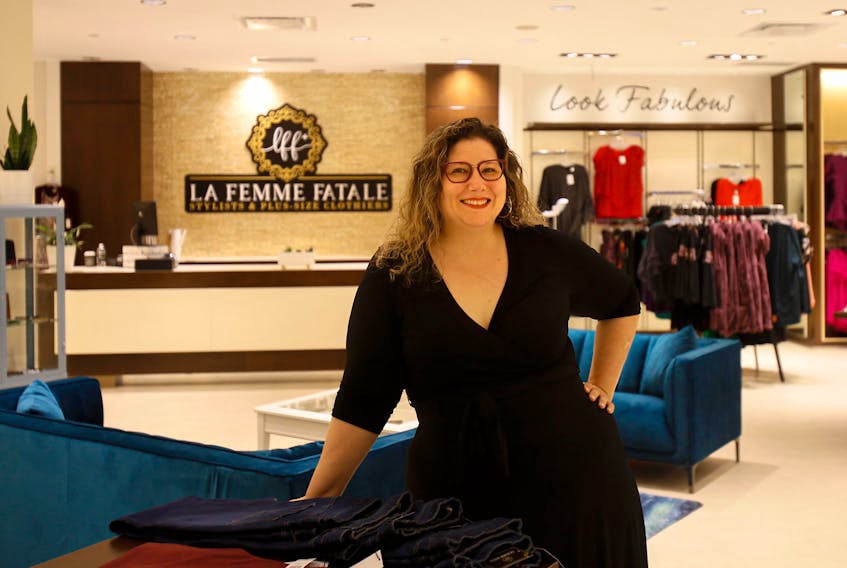
Here's what consistent actually looks like in practice. At the boutique we shot every Daily Try-On in front of our signature teal couch. That was it. That was the whole visual anchor. It didn't matter if it was me or one of our influencer partners doing the try-on — the moment that teal couch appeared in the frame, people knew it was Incandescent. Before a word was spoken.
Before the caption was read. The couch did the work.
Now filming for Downey & Co. I shoot my morning content in my solarium — plants everywhere, natural light, the same corner every time. Different business, same principle. A visual home that people recognize before anything else.
You don't need a professional studio. You need a consistent visual signature — a color, a location, a recurring element — that signals "this is her" the moment someone lands on your page.
Your check-in: Does your feed pass the three-second test? Could someone tell immediately who you are and what you're about — or does it feel like visual chaos?
If you're wincing right now — that's your answer.
2. Your Followers & Audience: Quality Over Quantity
Here's the question most business owners are afraid to ask: who is actually following me?
Not the number. The people.
Because 10,000 followers who have no interest in buying from you is not an asset. It's noise. And building for noise is one of the most exhausting things you can do in business.
When Alicia MacCarvel — a body positivity influencer and one of the most genuine cheerleaders I've ever had in my corner — mentioned us to her audience, 10,000 people visited our website.
I was so excited. And then we made $200. Why? Because every single one of them wanted the skirt she was wearing in the video. The one that had been sold out for months. And honestly? I did not blame them for a single second. That yellow, tiered, fine animal print skirt was really something special. My audience had already seen how fantastic it was and bought it up — we only ever carried six pieces of any item, so it was gone almost the moment it arrived.
To be clear: that is not a reflection of Alicia. Her support was real and generous and came from pure love for what we were building. She truly believed in my vision and shared my little boutique time and time again. We gained so many followers locally because of her, but her audience really wanted that skirt. And let's be honest — our audiences aren't exactly the same people. They weren't following her because they were looking for a size-inclusive boutique in Halifax. They were following her for her — her energy, her content, her personality. When she wore a skirt they wanted that specific skirt. Not a relationship with us.
Different pain points. Different purchase intent. Different moment in their journey.
Even the most powerful advocacy in the world can't override audience mismatch.
So go into your follower list right now. Take a real look. Are these your people — the specific person with the specific pain point you specifically know how to solve? Or are you collecting followers who found you once and have no real reason to stay?
Look at who's actually engaging. Not just liking — commenting, saving, sharing, DMing. Those are the people moving through your funnel. Those are your 5,000.
Your check-in: Are your engaged followers your actual ideal customers? Can you point to real people in your audience and say "yes, she is exactly who I'm building this for"?
If you can't — your content might be attracting the wrong people entirely. And that's a foundation problem we're going to fix.
3. Your Branding: The Three-Second Clarity Test
Imagine someone lands on your profile for the first time.
In three seconds — before they scroll, before they read, before they decide whether to follow — can they tell who you are, what you do, and why they should care?
Not vaguely. Specifically.
When I was building Downey & Co. I went back and audited the accounts of everyone who inspired me. Video by video I watched and took notes. I figured out what made some profiles instantly clear and others confusing. What ManyChat was and how people were using it. How they were talking to their ideal customer and building real relationships with them.
And the thing that separated the clear from the confusing wasn't production quality or follower count or how often they posted.
It was whether you knew within three seconds exactly what they were about.
Your branding isn't just your colors and your fonts. It's how you show up. It's whether your profile picture looks like a real human being or a blurry logo someone uploaded in 2019. It's whether your bio reads like a clear statement of who you help and how — or like a collection of random words with too many emojis.
It's whether your link in bio leads somewhere valuable — a freebie, a booking page, your website — or sits there pointing nowhere.
Check yours right now. Read your bio out loud. If it doesn't clearly say who you serve, what you do, and what makes you different in two sentences or less — it needs work.
Your check-in: Could a stranger tell within three seconds who you are and why they should follow you? Is your bio a clear invitation or a confusing collection of words?
4. Your Messaging: The "Does This Sound Like Me" Test
Scroll through your last fifteen posts and read the captions out loud.
Out loud. Actually do it.
Because here's what happens when you read your own captions silently: you hear what you meant to say. When you read them out loud you hear what you actually said.
In the early days of the boutique my captions were all over the place. Some were funny. Some were serious. Sometimes we didn't even bother to use them. Some were just "new arrivals, link in bio." There was no thread connecting them. No consistent voice. No sense that the same person wrote all of them.
It wasn't until the Daily Try-Ons that my messaging got clear. Every video had a purpose. Show the clothes, talk about fit and fabric, give styling tips, make women feel confident enough to come try it on. And the CTA was always organic. Always felt like a natural next step.
"Ooohhh ladies, you are going to LOVE the way this feels when you come try this on."
"We only have one more left in this size, so if you need it, it won't last long."
That's not a sales pitch. That's a conversation. And conversation converts in a way that "buy now" never will.
Now. Let's talk about AI. Because I know you're using it. And I'm not going to tell you to stop.
You're busy. You're running a business by yourself. You cannot always summon a brilliant caption out of thin air at 9pm on a Tuesday when you're exhausted and you still have three posts to schedule. I get it. Use the tools available to you.
But I am going to tell you what every university professor in the sciences tells their students on day one: garbage in = garbage out.
If you haven't figured out how to teach AI your brand voice, you're going to have a problem. If you're just typing "write me a caption about my new product" into a prompt and copying whatever comes out, your audience can tell. They might not be able to name it. But they feel it. That slightly-too-polished, slightly-too-generic energy that sounds like every other account they follow. The one that's full of affirmations that sound meaningful but say nothing. The one that could have been written by anyone about anything.
AI is a starting point. Not a finishing point. The real work is teaching it who you are. Your voice, your customer's pain points, the way you actually talk to people. And then you take what it gives you and you do the final human rewrite. The layer that makes it sound like you wrote it at your kitchen table with a coffee going cold beside you. That's the part that nobody skips and gets away with.
The good news is we have a whole module coming up on exactly how to use AI effectively in your business. How to prompt it, how to train it on your voice, and how to make it work for you instead of against you.
For now, read your captions out loud. Ask yourself honestly whether this sounds like you. Does every post have a clear purpose and a natural next step? Or are you filling space with words that sound fine but feel like nobody in particular wrote them?
Your check-in: Does your messaging sound consistently like you? Do your captions tell a story, provide real value, and invite people toward a natural next step? Or are they vague, inconsistent, and could have been written by anyone with a ChatGPT account?
5. Your Metrics: The Reality Check
Here's what the government-funded "digital strategist" gave me after three sessions and $5,000 worth of consulting: followers, likes, reach, and engagement rate.
Here's what she didn't give me: context. She never connected a single number to whether our content was actually bringing people into the store, generating DMs about sizing, or turning window shoppers into buyers who came back every season.
Numbers without context are meaningless.
And here's the truth about metrics that nobody in the highlight-reel version of social media wants to admit: likes don't pay your bills. Reach doesn't pay your rent. A follower who never buys is just a number on a screen.
That said — you need those numbers at the top of the funnel. You need views to get people into your ecosystem. You need followers to have an audience to nurture. The goal isn't to dismiss those numbers. The goal is to not stop there. To dig deeper. To ask the question that actually matters.
Not "how many people saw this." But "what did they do after."
Did they click? Did they DM? Did they save it? Did they follow? Did they buy?
Go into your insights right now. Pull up your last twenty posts. Which ones got the most saves — not likes, saves? Which ones generated DMs? Which ones drove website clicks? Which ones brought people through your door or to your checkout?
Those are your real metrics. Everything else is context, not a conclusion.
Now here's where most business owners stop. They look at their social media insights, feel reasonably good or reasonably bad about what they see, and close the tab. But your social media insights are only one piece of the picture. The bigger question is what happens after the click.
Do you know which social media platforms are actually driving people to your website? Not which ones have the most followers. Which ones are sending real traffic. Because those are not always the same platform and the answer might surprise you.
Do you have landing pages set up for each social media account? Or are you sending everyone to your homepage and hoping they figure out where to go? A dedicated landing page for your Instagram audience, a different one for your TikTok audience, tells you exactly where your buyers are coming from. Without that, you're guessing.
Are you running specific campaigns — a launch, a sale, a freebie — and do those campaigns have their own landing pages so you can track exactly how many people took action from that specific push? If not, you have no way of knowing whether your campaign worked or whether people would have found you anyway.
And are you using Google Analytics? Because your social media insights tell you what happened on the platform. Google Analytics tells you what happened after. Which pages people landed on. How long they stayed. Where they went next. Where they dropped off. Whether they made it to your checkout or abandoned halfway through. That's the behaviour data that tells you whether your website is doing its job or quietly losing people you worked hard to attract.
I know that sounds like a lot. And if your answer to most of those questions is "I don't know" — that's not a failure. That's a starting point.
The businesses that grow are the ones that get honest about what they're actually tracking, set up the systems to track it properly, and then use that information to make better decisions.
Not the ones with the most followers. The ones who know what's working.
Your check-in: Can you connect your content directly to business outcomes? Do you know which platforms are driving real traffic to your website? Do you have landing pages that tell you where your buyers are coming from? Are you using Google Analytics to understand what people do after they click? If you answered no to most of those — we have work to do.
6. Your Response Times: The Trust Builder
I want to tell you about a Pilates instructor I watched go viral for all the wrong reasons.
She was closing her business. Stressed, overwhelmed, at the end of her rope. And when a customer left a negative comment about a sales interaction — instead of responding privately, professionally, with grace — she clapped back publicly.
Then she doubled down. A whole series of videos explaining why she was right and everyone else was wrong. Why her policies were clear and her customers were unreasonable.
She went viral. Hundreds of thousands of views.
Zero new clients. Business closed anyway. And the Pilates community remembers it to this day.
Here's what that story teaches: your response time matters. Your response tone matters even more.
Because people remember how you make them feel online long after they've forgotten what you posted. A customer who DMs you with a question and gets a genuine, helpful, timely response?
She remembers that. She tells her friends. She becomes one of your 5,000 loyal customers.
A customer who gets ignored — or worse, gets a defensive, dismissive response — tells everyone she knows.
I know first hand how hard that is to stay on top pf it all. I cared deeply about my all customers at the boutique, but couldn't always respond as timely as I would have liked to. The problem was capacity. I was running a store, managing staff, creating content, and trying to respond to every comment and DM — all at the same time. Something had to give. And response time was often the thing that gave.
Today I'd do it differently. I'd have someone on my team whose entire job was community engagement — watching for comments, responding to DMs, welcoming new followers, engaging with local content. Not because I don't want to show up personally. Because the algorithm rewards genuine participation and because your community deserves a response even when you're on the sales floor.
It doesn't have to be you in every comment. It has to be your brand. Consistently. Genuinely. Every single day.
Your check-in: Are you responding to comments and DMs within 24 hours? Is your response tone warm, helpful, and consistent with your brand voice? Do you have any system — even a simple one — for staying on top of community engagement?
7. Your Consistency: The Staying Top-of-Mind Test
In the early days of the boutique I posted when I felt inspired.
Sometimes three times in one day because the light was good and I was excited about new arrivals. Then nothing for a week because I was busy running the store. Then a panicked burst of content because I felt guilty about going quiet.
My engagement was all over the place. Because my presence was all over the place.
It wasn't until we committed to the Daily Try-Ons — same time, every single day, no exceptions — that something shifted. People started tuning in. They knew when to expect us. They built us into their routine. And when we missed a day? They'd message asking where we were. If everything was okay.
That's the power of consistency. Your audience can't support you if they forget you exist.
Consistency isn't about posting every day. It's about showing up on a schedule your audience can count on. Three times a week done consistently beats seven times a week for two weeks and then silence. Every single time.
Pull up your posting history for the last month. Be honest about what you see. Is there a pattern your audience could rely on — or does it look like you disappear for stretches and then flood your feed trying to make up for it?
Your check-in: Are you showing up on a schedule your audience can actually count on? Or does your posting history look like a series of inspired bursts followed by guilty silences?
7. Your Consistency: The Staying Top-of-Mind Test
Go back through each of your seven check-ins. Count how many made you wince.
If it was one or two — you have a solid foundation with some gaps to address. Pick the one that made you most uncomfortable and start there.
If it was three or four — you're building on uneven ground. The good news is you already know what needs attention. The five foundations we're building over the next five posts will address most of it directly.
If it was five, six, or seven — don't panic. This is exactly where I was when I opened the boutique. And I figured it out. You will too. The difference is you have a roadmap and I was making mine up as I went.
This isn't a grade. It's a starting point.
The businesses that grow aren't the ones that start perfect. They're the ones that get honest about where they are — and then build deliberately from there.