You Already Know the Story
Five years of figuring it out in real time.
You know what it cost me. You know about the government strategist who charged $5,000 to tell me to keep doing what wasn't working. You know about the 216,000 views that made $0. You know about the Daily Try-Ons and the moment everything finally clicked.
So I'm not going to retell it. If you didn't get to read it yes I recommend going back and having a quick read. [I learned this the hard way — start with Blog #1 here →]
What I'm going to do in this article instead is show you what I wish I'd had from day one. Not the tactics — those are everywhere. The foundation. The five things that have to be in place before any tactic has a chance of working.
Because here's what I've learned building Downey & Co. after everything Incandescent taught me: it's not that the tools are hard. It's that most people build with them before the foundation is set. And you can't build a house on sand no matter how good your tools are.
These five things are the foundation. Get them right and everything else gets easier. Skip them and you'll spend years doing what I did — working harder than anyone should have to, wondering why it's not translating.
Let's build it right this time.
The Foundational Framework
1. Brand Identity: Everything You Post
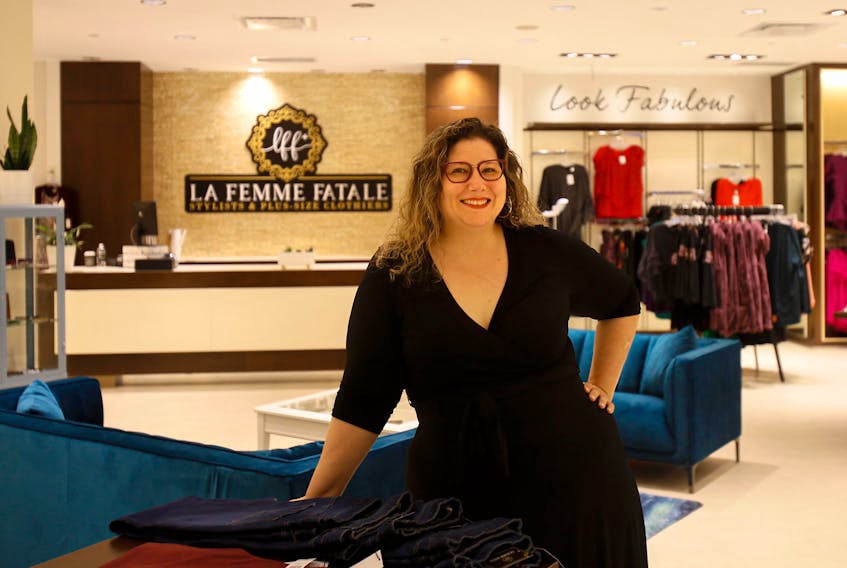
I propped my phone up in a cabinet with a dirty lens and filmed try-ons in the middle of a working store.
No tripod. No ring light. Hand over the lens to start and stop the video. Whatever I was wearing that day. Whatever was happening in the background.
I didn't call it a content style. I didn't call it anything. I just showed up as myself because I didn't know any other way.
And that, it turns out, was the whole point.
Your brand identity is your business's personality — how it looks, sounds, and feels every time someone encounters you online. Your colors, your fonts, your tone of voice, your values. That intangible something that makes people go "yep, that's totally them." When it's consistent, people feel safe buying from you. When it's all over the place, they quietly leave without knowing why.
I know this because I never wrote mine down.
I knew what I cared about. I knew my vibe was warm and real and unpolished. I knew my customers were plus-size women who were tired of the parking lot pep talk — that little speech you give yourself before walking into a store, bracing for the moment you realize nothing comes in your size. I knew all of that in my bones.
But I never documented it. Never wrote down my exact colors, my fonts, my rules for how the brand looked and sounded. So every time I brought someone in to help, they guessed. Every time content went sideways, I fixed it manually instead of just handing someone a one-pager that said "this is what we are."
We did it properly for a client — Raven Heart Tarot. Defined her colors, her fonts, her imagery style, her tone of voice. All of it written down. Now when someone sees her content anywhere — a Reel, a blog post, an email — they recognize it before they even read her name.
That's what documentation does. It turns a vibe into a brand.
I had the vibe. I just never turned it into a brand guidelines. And I felt that gap every time I needed help, every time content looked inconsistent, every time I had to explain from scratch what Incandescent was supposed to feel like.
Write it down. Even a one-pager. It will save you hundreds of hours.
2. Audience: Know Exactly Who You're Talking To and Why
I had pages of demographics. Age ranges. Household income. Obesity statistics by province. I'd dug deep into the research because that's where I shine — I'm a scientist at heart, I trust the data.
What I didn't have was my customer.
There's a difference. Demographics tell you who someone is on paper. Knowing your customer means understanding who she actually is — her life, her frustrations, the thing she's been looking for that nobody has given her yet. That's a customer persona. And most business plans don't have one.
A customer persona goes beyond age and income. It's the full picture.
At Incandescent I had more than one. There was the woman in her 40s who had a great career, a full life, and absolutely no idea how to dress her body after it changed through perimenopause. She wasn't broke. She was lost. She'd walk into regular boutiques and leave empty-handed and defeated. Her pain point wasn't "I need clothes." It was "I don't recognize myself anymore and I need someone to help me feel like me again."
Then there was the younger woman — late 20s, early 30s — who'd grown up being told her body was wrong. She'd spent her whole life in fast fashion because that's what came in her size and she'd never been shown anything different. Her pain point wasn't "I want better clothes." It was "I've never been allowed to care about how I dress and I don't even know where to start."
Two completely different women. Two completely different pain points. Two completely different conversations.
But here's what they shared: they were both buying confidence. They were both buying the feeling of walking into a room and knowing they looked good. They were both buying relief from years of settling for whatever fit because nothing else came in their size.
And that's exactly why we were talking to them. Because we could solve that. Because we'd lived it. Because nobody else in Halifax was speaking directly to those pain points and we were uniquely positioned to fix it.
I didn't know how to articulate any of that when I opened. So I couldn't say it to them. And when you can't name your customer's pain point — you can't write content that stops her mid-scroll. You can't write an email that makes her feel seen. You can't write a caption that makes her think "oh my god, she's talking about me."
Here's what happens when you do know: your content stops feeling like marketing. It starts feeling like a conversation. Like you reached through the screen and spoke directly to the one person who needed to hear it.
That's when people follow you. Save your posts. Tell their friends. Come through your door.
Get specific. Build your personas. Name them if it helps — give them a life, a frustration, a reason they haven't found what they're looking for yet. Then get clear on why you are the right person to solve it.
Write her a letter in your head before you write a single caption.
Everything else follows from that.
3. Content Style: Show Up the Same Way Every Time
Here's the thing about consistency that nobody talks about: it's not about posting frequency.
It's about showing up the same way every time so people know what to expect from you.
Your content style is the visual and emotional tone of everything you put out — personal, professional, faceless, minimal, glam, retro. It tells people what kind of experience to expect from your brand before they read a single word.
I didn't choose personal as my style. I defaulted to it. Dirty lens. Phone in a cabinet. Real bodies in real clothes with honest commentary about fit and fabric.
But here's what I didn't do consistently: the look. The visual brand. Different graphics, different fonts, different color treatments depending on who made the post or what day it was.
So while my video content felt like me, my static content looked like it belonged to three different businesses.
People pick up on that inconsistency even when they can't name it. It creates a low-level distrust. And distrust kills sales quietly, invisibly, before you ever know it happened.
Here's what consistency actually looks like in practice.
At Incandescent we shot every Daily Try-On in front of our signature teal couch. That's it. That was the whole visual anchor. It didn't matter if it was me doing the try-on or one of our influencer partners — the moment that teal couch appeared in the frame, people knew it was us. Before they heard a voice. Before they read a caption. Before they saw a logo. The couch did the work.
That's what a visual signature does. It makes you recognizable before you even open your mouth.
Now filming for Downey & Co., I do my morning content in my solarium — plants everywhere, natural light, the same corner every time. Different business, same principle. People who follow me know that space. They expect it. It's become part of what showing up looks like for this brand.
You don't need a professional studio. You don't need expensive equipment. You need a consistent visual home that people start to associate with you — a color, a location, a recurring element that signals "this is her" before anything else does.
Choose your style. Bright or moody. Personal or polished. Faceless or founder-led. Find your visual anchor and use it every single time. Then document it and protect it like it matters.
Because it does.
4. Funnels: How You Take Someone From "I Like This" to "Take My Money"
I used to post and hope.
I'd create something, put it out into the world, and then refresh my notifications waiting to see what happened. Sometimes something caught. Usually it didn't. I had no idea why, in either direction.
Here's what I didn't understand: brand identity, audience, and content style are the foundation. They tell you who you are, who you're talking to, and how you show up. But none of those things move someone toward buying. That's what a funnel does.
A funnel is the path someone takes from the moment they discover you to the moment they hand you their money. And most business owners don't have one. They have content. They have a brand. They have an audience they're trying to build. But they don't have a path.
Without a path, people find you, enjoy you, and forget about you. Not because they didn't like you. Because nobody showed them where to go next.
Think about how it actually works when someone discovers you online. Maybe they stumble across a Reel. They watch it. They think "oh I like her." They might follow you. They go back to their day. That's it. That's where most businesses lose people. Right there. In the "oh I like her" moment — because there's nowhere to go from there.
A funnel changes that. It takes that "oh I like her" moment and turns it into a journey. And every piece of content you create has a job in that journey.
Top of funnel: Get seen.
These are your Reels, your hooks, your pattern interrupts, your trending audio, your "wait what is happening" moments. Their only job is to make a stranger stop scrolling long enough to notice you exist.
At the boutique this was our TikTok content. Videos of new arrivals. Styling tips. Body positivity content that made women feel seen. We weren't trying to sell anything at the top of the funnel.
We were just trying to get people to stop.
Your top of funnel content should feel easy and shareable. It should make people think "I need to send this to my friend." It's the widest part of the path — you're casting a net, not closing a sale.
And never stop posting that get seen for the firs time content. The moment you do it will effect your whole funnel.
Middle of funnel: Build trust.
This is where the relationship actually forms. These are your tutorials, your behind-the-scenes, your stories, your Daily Try-Ons, your emails, your blog posts. Their job is to make someone think "if this is what she gives away for free, imagine what I'd get if I paid."
This is the longest part of the journey and the part most people rush. They want to get to the sale. But the middle of the funnel is where trust lives — and trust is the only thing that actually converts a follower into a buyer.
At the boutique the Daily Try-Ons were pure middle of funnel. Five outfits every single day. Real bodies. Honest commentary about fit and fabric and how it actually felt to wear it. Women watched every day not because we were selling — but because they were learning. They were building a relationship with us. They were getting to know our taste, our values, our voice.
By the time they came into the store they already trusted us. There were genuinely excited to be there and they could not wait to try the clothing on. We'd earned it through the middle of the funnel.
Middle of funnel content answers the questions your customer is asking before she's ready to buy. What's it like to work with you? Do you actually know what you're talking about? Are you the kind of person I want to give my money to? Do you understand my problem?
Answer those questions consistently and generously. The sale takes care of itself.
Bottom of funnel: Invite the sale.
This is where most people get uncomfortable. The actual ask. The offer. The "here's how we work together" moment.
Bottom of funnel content is your testimonials, your product features, your pricing, your "DM me," your "book a call," your "this dress is available now in sizes 12-24." Its job is to make it easy for someone who already trusts you to say yes.
Notice that word: already. Bottom of funnel only works on people who've been through the middle. If you're pushing bottom of funnel content at people who just found you — they're not ready and it feels pushy. But if you've done the middle of funnel work? Bottom of funnel feels like a natural next step. Like you're just opening a door they were already walking toward.
At the boutique the bottom of funnel was simple. "Come try it on." "DM us for details." "This is in store now." We didn't need elaborate sales copy because the Daily Try-Ons had already done the work.
The part I was missing: what happens between visits.
Here's the gap I didn't see until it was too late. Someone finds you. Watches a few videos. Really likes you. But she's not ready to buy yet. Maybe she just got a bill she wasn't expecting. Maybe she's waiting for payday. Maybe she needs to think about it.
And then life happens. She gets busy. Your content gets buried in her feed. Three weeks pass and she's forgotten you exist. Not because she didn't want to buy. Because you had no way to stay in her world while she was making up her mind.
That's what email does. That's what a lead magnet does. That's what an automated nurture sequence does. It keeps you present with someone who likes you but isn't ready yet — so that when she is ready, you're the first person she thinks of.
I didn't have any of that at the boutique when I started out. No email flows. No lead magnets. No automated way to stay in touch with someone who wasn't ready to buy yet. So when life got in the way and I couldn't show up consistently — they lost track of us. And we lost sales we'd already half-earned.
A real funnel works even when you don't. That's the whole point.
Not more content. A smarter path. One that takes someone from "oh I like her" all the way to "I am definitely buying that" — with a clear next step at every single stage.
5. Metrics: Track What's Actually Working
I celebrated the 216,000 view video. I shouldn't have. It made $200.
Meanwhile the Daily Try-On with 300 views brought two or three women into the store who each spent $200 and came back every season for years.
Three hundred views. Real revenue. Real relationships. Real business.
Here's the thing though — I'm not going to tell you that views and followers don't matter. They do. You need people at the top of the funnel before you can move them through it. No followers means no audience. No views means no visibility. Those numbers are real and they matter.
But they're the beginning of the story. Not the end of it.
A follow is someone raising their hand and saying "I'm interested." A view is someone stopping long enough to pay attention. Those are good things. Those are the people entering your funnel.
The mistake isn't caring about those numbers. The mistake is stopping there. Is celebrating the 216,000 views without asking what happened next. Did they follow? Did they click? Did they DM? Did they buy?
That's the difference between a vanity metric and a metric that matters.
Vanity metrics tell you people saw your content. Metrics that matter tell you what those people did about it. Website clicks. DMs asking about your product. Email signups. Bookings. Sales. People walking through your door saying "I saw you online."
So yes — grow your following. Chase those views. Get yourself seen. But then ask the next question every single time: what did they do after?
Here's the other part nobody talks about when they talk about metrics. The algorithm isn't just measuring your content. It's measuring your behaviour.
Social media platforms are built for one thing: to be social. The algorithm isn't just watching what you post — it's watching what you do after you post. Are you responding to comments? Are you answering DMs? Are you watching other people's content and engaging with it genuinely? Are you participating in the community or just broadcasting into it?
Because here's what the algorithm knows: if you post and disappear, you want to be seen but you don't want to participate. And platforms don't reward that. They're not going to push your content to new audiences if you're not doing your part to keep people on the platform.
I learned this the hard way. We'd post something and move on. Back to running the store. Back to the hundred other things that needed doing. And our reach would quietly shrink because we weren't showing up in the comments, weren't responding fast enough, weren't engaging with the community around us.
The posts that performed best were always the ones where I was present. Responding to every single comment. Answering every DM. Having actual conversations with the people who showed up.
That's not a coincidence. That's the algorithm doing exactly what it's designed to do — rewarding genuine participation.
Here's the practical truth: you probably can't do all of this yourself. Running a business and maintaining genuine community engagement at the same time is a full time job on top of a full time job. This is where having someone on your team whose job is community engagement changes everything.
When someone on your team is watching for comments, responding to DMs, engaging with local content, and showing up in the community on your behalf — the algorithm reads that as active participation. It sees a business that's in this to win it. And it rewards you accordingly.
It doesn't have to be you in every comment. It has to be your brand. Consistently. Genuinely.
Every single day.
Every post is a test. Some tests reveal that your top-of-funnel content is strong. Some reveal that people trust you but don't know how to buy from you. Some reveal that you're reaching the wrong people entirely.
None of that is failure. All of it is information.
The businesses that grow are the ones that chase the right numbers at the right stage, show up in the conversation, and never lose sight of the question that matters most: Is this connected to revenue?
Before We Go — A Quick Gut Check
We're going to spend the next five posts going deep on each of these foundations. One at a time. With the worksheets and tools to actually build them.
But before we do — be honest with yourself. Just a quick scan.
Brand Identity: Could you hand someone a document tomorrow that shows them exactly what your brand looks and sounds like?
Audience: Could you describe your customer's real pain point — not her demographics, her actual pain — in one sentence?
Content Style: Does your content look and feel like the same brand everywhere it shows up?
Funnels: Does every piece of content you create have a clear job in moving someone toward buying?
Metrics: Can you connect your content directly to revenue — not just views, actual dollars?
If you hesitated on any of those — that's exactly where we're going next.
One foundation at a time. Built properly. In order.
What I Want You To Know
It took me three years to hit $500K in revenue. Five years to understand what a digital strategy actually was. And a closed business to finally see the full picture clearly.
I'm not telling you that to make you feel behind. I'm telling you that because I need you to hear this: It is never too late to start building your digital strategy. Never.
It doesn't matter if you've been in business for six months or six years. It doesn't matter if you've been posting randomly, chasing the wrong metrics, speaking to no one in particular, and wondering why none of it is connecting to revenue. It doesn't matter if you've tried things that didn't work, hired people who didn't deliver, or spent money on tactics that went nowhere.
None of that is wasted. All of it is information. All of it is the education that makes the foundation you're about to build actually stick.
Here's what I know from the other side of it: the businesses that build their foundation — even late, even after years of figuring it out the hard way — are the ones that stop feeling like they're pushing a boulder uphill. Something shifts. The content gets easier. The right people start finding you. The metrics start connecting to real money. The whole thing starts to feel like a system instead of a scramble.
That shift is available to you. Right now. Wherever you are.
I didn't have anyone to hand me a roadmap. I built mine from scratch, in real time, through every mistake and every unexpected win and every moment where something finally clicked.
You have the roadmap. It's right here. And we're going to build it together — one foundation at a time, in the right order, so that everything you create from this point forward has a purpose and a path.
It's not too late.
It's actually exactly the right time.