The Hardest Part Wasn't The Money
The hardest part of scaling wasn't financial. It was time.
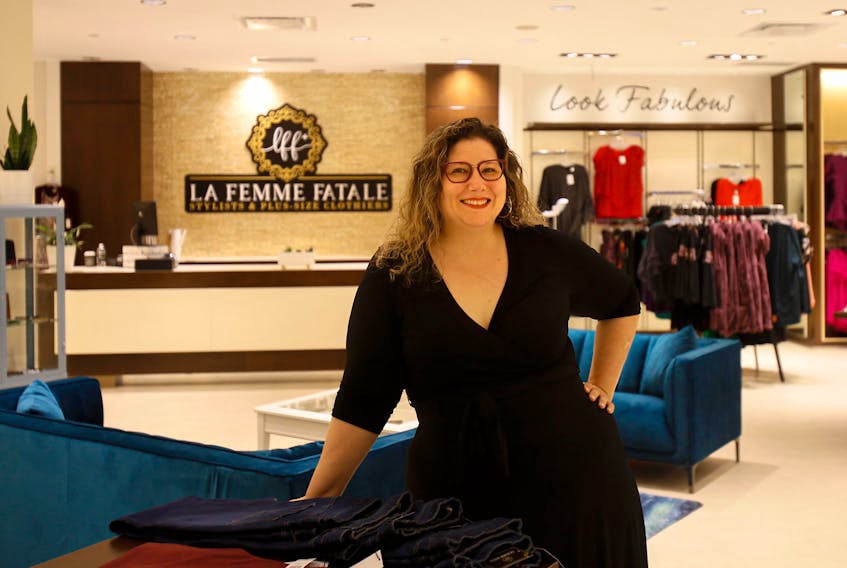
I could do social media really well. I had built a community of women who resonated with my message—that every body deserves beautiful clothing that fits. That living in a large body shouldn't hold you back from anything.
But I was burned out.
I was wearing every single hat. And even though I had staff, they weren't invested the way I was.
They saw it as a job. They got paid whether customers bought anything or not.
I saw it as someone leaving disappointed because my team wasn't giving them the white glove service I would have given. The personalized styling. The "you are beautiful and here's how to show it" experience that made women feel seen.
What I Wish I'd Known About Hiring
For the first few years, I had an amazing team.
They were keen. They loved fashion. They always showed up. We had the greatest time filming try-ons together. They were excited to get the work done. They cared about the customers the same way I did.
I thought this would just... continue. That this was what having a team felt like.
But like with any retail business, people move on. They found higher-paying positions. They moved to work they loved more. And I thought that was just part of business. Normal turnover. Nothing to worry about.
I had taught at university. I knew how to train people. I had systems in place.
But here's what I didn't realize: those systems had grown organically WITH my original staff. We'd built them together. They understood the WHY behind everything we did because they'd been there when we figured it out.
When they left and I hired new people, I tried to hand them the systems. But the systems alone weren't enough.
The new staff didn't understand that we weren't just selling clothes—we were changing lives. They didn't see why the personalized styling mattered. They saw it as a retail job. Clock in, help customers, clock out, get paid.
And I didn't know how to transfer the mission. The passion. The care.
I thought I could train them the way I'd trained students at university. Teach them the process, they'd execute it. But teaching academic concepts is completely different from teaching someone to CARE about the customer experience.
I also didn't know that experience doesn't equal ability. That hiring people you know can burn you. That you need systems to identify people who CARE, not just people who have retail experience.
And here's the part that still hurts: Part of why we closed was because women hated our main staff member. She was sloppy. Lazy. Rude.
I didn't know.
They didn't tell me until after we'd closed, after she'd quit. They told me then. When it was too late to fix it.
That was a hard lesson to learn.
So What Was The Success?
When everything fell apart and I had to close the doors and file bankruptcy, I felt like a complete failure.
All those quantitative measures of success—the revenue numbers, the sales goals, the growth projections—they were gone. We didn't make it.
I had no idea how wrong I was about that.
I had no idea that even though my business closed, I had changed lives. That my real measure of success was never the dollar amount in my revenue column. It was qualitative.
It was in every life I touched. Every woman I dressed. Every connection I made. Every mind I changed.
I live in a large body. And yet I have a master's degree and a PhD. I've traveled the world. I speak three languages. I've climbed volcanoes. I taught as a lecturer at a university. I got married and had kids.
All while being fat.
Your body should never be the thing that holds you back. And for every woman who got that message, who saw what they could truly be, who looked at themselves in the mirror and stopped talking badly to herself and started embracing herself for who she is and all that she can do?
That was my win.
That was the real success.
The True Success Framework: Revenue + Impact + Sustainability
Here's what I learned: Success isn't one-dimensional. It's not JUST revenue. But it's also not JUST impact. It's three things working together:
1. Revenue (Quantitative)
The numbers you can measure:
• Monthly/annual revenue
• Profit margins
• Customer acquisition cost
• Lifetime customer value
• Growth rate
Why this matters: You can't sustain a business without money. Impact doesn't pay the bills. If you're not profitable, you can't keep the doors open long enough to create the impact you want.
2. Impact (Qualitative)
The lives you touch:
• Customer transformations
• Community connections
• Lives changed
• Problems solved
• Moments that matter
Why this matters: This is WHY you're building the business. The mission behind the money. This is what makes you get up in the morning even when it's hard.
3. Sustainability (Operational)
How you're building it:
• Systems that work without you
• Team members who actually care
• Boundaries that protect you
• Energy and health you maintain
• A business model that doesn't require burning out
Why this matters: You can't create impact if you're burned out. You can't sustain revenue if you're doing everything yourself. Without sustainability, the whole thing eventually collapses.
The trap I fell into: I had Revenue and Impact. But I didn't have Sustainability.
I hit $500K (revenue). I changed lives (impact). But I was burned out, doing everything myself, with a toxic staff member I didn't even know about (no sustainability).
When external forces hit (economy, interest rates, line of credit being called), the whole thing collapsed because it was built on me alone.
True success requires all three.
This is why you need a digital strategy—not to chase arbitrary follower counts or revenue targets, but to build all three: revenue that sustains you, impact that matters, and systems that don't burn you out.
Your Success Audit: What Are You Actually Measuring?
Answer honestly:
Revenue (Quantitative):
What revenue goal are you chasing? $_______________
Why that number? What will it give you? ____________________________________________
Are you profitable or just hitting revenue targets? ☐ Profitable ☐ Revenue only ☐ Not sure
Do you actually know your numbers? ☐ Yes ☐ No ☐ Sort of
Impact (Qualitative):
Whose life is better because of your work? __________________________________________
What transformation do you create? ________________________________________________
How do you know you're making a difference? _______________________________________
When's the last time a customer told you how you helped them? _______________________
Sustainability (Operational):
Can your business run without you for a week? ☐ Yes ☐ No ☐ Maybe
Do you have systems in place that someone else could follow? ☐ Yes ☐ No ☐ Some
Are you burned out? ☐ Yes ☐ No ☐ Getting close
Do you have team members who actually care? ☐ Yes ☐ No ☐ Don't have a team
Could you take a real vacation without checking your phone every hour? ☐ Yes ☐ No
If you're strong in 1-2 areas but missing the third, something will eventually break.
For me, it was Sustainability. I had Revenue and Impact, but the operational foundation couldn't hold when external forces hit.
What about you?
"Success is not final, failure is not fatal: it is the courage to continue that counts."
Winston Churchill said that.
I put that quote on the front page of my PhD thesis. So many times during my doctorate I wanted to throw in the towel. So many times I looked at how far I'd come and had to motivate myself to keep going.
The same courage that got me through my PhD is the same courage that got me through closing my business.
And it's the same courage that helped me start again.
What Success Actually Looks Like Every Day
Let me give you an example. You're a bread baker. You can bake the best sourdough in the world. But if you don't know how to build connection with your customers—if you're just posting pictures of bread instead of sharing grandma's secret recipe or the time you spilled flour all over the floor—you won't build community.
And then Janet shows up at the farmer's market and tells you her kid learned to bake from your videos. She wants you to teach a class. She and her friends have been talking about you.
That's impact. That's qualitative success. That's what you can't measure in a revenue column.
Or here's my version: The win is being able to take a break to run over and get my daughter from the bus AND listen to my client get genuinely excited about how she managed to infuse her vision into the pages of her new website.
The win is using the knowledge I built the hard way—over endless nights editing Daily Try-Ons—to help my tarot card client optimized her creation process. I wrote a Python script to pull data from her 500 YouTube videos that had no captions, showed her how to get AI to summarize the content and pull out key moments, so she could write her own authentic captions. We the used that video content to write blogs and start creating shorts that resonate with her audience.
The wins are what we need to be celebrating. The KPIs we set up need to be balanced between our revenue goals and our qualitative, tangible, non-metric things—like when a random customer sees you on the street and tells you the pockets in the dress she bought from you were the talk of the wedding she just attended. Or how she impressed her mother-in-law at Thanksgiving dinner because she had the courage to bake cinnamon buns because you taught her how.
That's impact. That's what matters.
What I Want You To Know
If you're reading this and you're struggling, if you feel like you're failing, if you're wondering if any of this is worth it—here's what I need you to hear:
Never give up.
Just because this business doesn't work doesn't mean the next one won't.
You learn so much every single time you show up and take the risk and begin something new. Every failure teaches you something. Every closed door opens another one.
My boutique closed. But I learned more in those years than I could have learned any other way.
I learned what real success looks like. I learned that revenue isn't the only goal—impact matters too. I learned that you can't do it all alone. I learned that systems matter. That hiring matters. That sustainability matters.
And I learned that sometimes the courage to continue means pivoting. Starting something new. Taking everything you learned and building something better.
Redefining Success For Yourself
So here's what success actually looks like:
Success is impact. The lives you touch. The people you help. The transformations you create.
Success is sustainability. Building something that doesn't burn you out. Having help in the right places. Creating systems that work without you being everywhere at once.
Success is courage. The courage to start. The courage to fail. The courage to try again.
Success is defining it for yourself. Not chasing someone else's version of what you "should" want. But building a business that aligns with YOUR values, YOUR life, YOUR definition of what matters.
What This Means For Your Digital Strategy
This is why you need a digital strategy that supports YOUR definition of success.
Not someone else's arbitrary follower count. Not some guru's revenue target. Not the hustle culture version of "making it."
A digital strategy that helps you build all three:
Revenue - So your business is profitable and sustainable
Impact - So you're creating the transformation you're meant to create
Sustainability - So you don't burn out building it
A digital strategy helps you:
• Define what success actually means to you
• Build systems so you're not wearing every hat
• Know who to hire and when to hire them
• Create content that builds real relationships
• Turn followers into community
• Turn community into customers who come back
• Measure what actually matters (not just vanity metrics)
It's your roadmap for building the business you actually want. Not the one you think you're supposed to want.
Keep Going
Whatever you're building right now, whatever stage you're in, whatever struggles you're facing—keep going.
Success is not final. Failure is not fatal. It is the courage to continue that counts.
I closed my boutique. I filed bankruptcy. I felt like I'd failed.
But I hadn't failed. I'd learned. I'd grown. I'd touched lives.
And now I'm here, building something new. Helping other solopreneurs avoid the mistakes I made. Teaching what I learned the hard way.
That's success.
And yours is waiting for you too.